
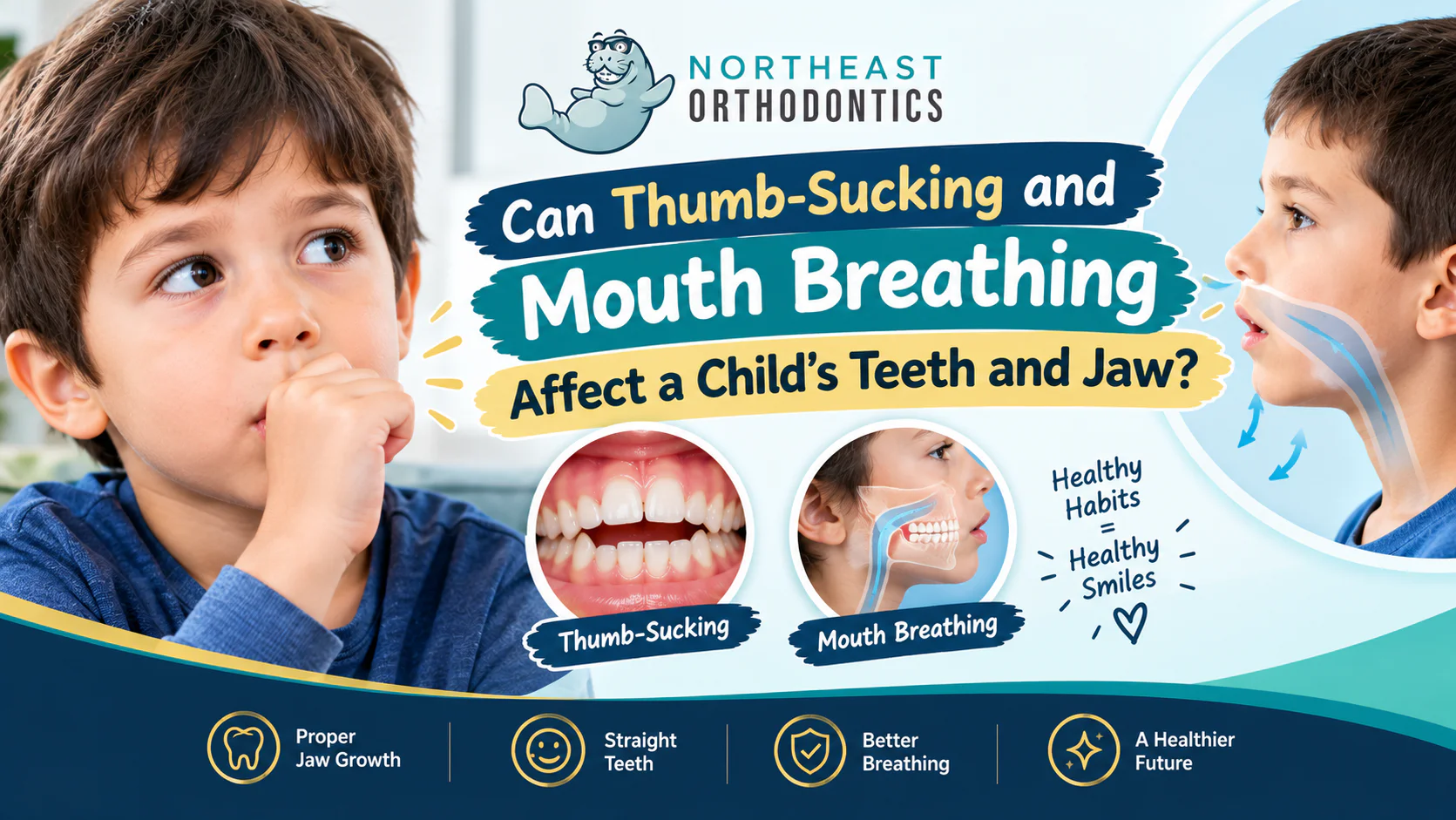
Thumb-sucking and mouth breathing can affect a child’s teeth and jaw development when these habits continue past the early toddler years. This is because constant pressure can change the palate, affect how teeth come in, and shift the direction of jaw growth. Occasional thumb-sucking in infants and mouth breathing during a cold are usually not a concern. However, habits that continue for longer can put steady, repeated pressure on bones and teeth that are still forming.
This article explains how habits can affect developing teeth and jaw structure. It also explains which signs parents should watch for. You will also learn what parents can do to help a child move past these habits before they cause lasting changes.
How Does Thumb-Sucking Change the Position of Growing Teeth?
Thumb-sucking can change the position of growing teeth by pushing the upper front teeth outward while pulling the lower front teeth inward. Even with the mouth closed, this creates a visible gap between the top and bottom teeth. This shift happens because of the thumb’s constant pressure and position. The sucking motion itself does not cause the change.
Can Prolonged Thumb-Sucking Affect the Shape of the Palate?
Prolonged thumb-sucking can affect palate shape by pushing the tongue down and out of its normal resting position. This removes the gentle upward pressure the tongue usually provides, which helps widen the upper jaw. Without this support, the palate may grow narrower and more arched than it normally would.
How Can Mouth Breathing Influence Jaw and Facial Development?
Mouth breathing can affect jaw and facial development by changing the jaw’s and tongue’s resting position. This usually causes the lower jaw to go downward and backward rather than forward, as it normally would. Eventually, it can make the face seem longer and narrower.
What Dental Changes Can Develop From Long-Term Oral Habits?

If your child continues thumb-sucking or mouth breathing for a long time, it can lead to an open bite, a protruding upper bite, crowding, or a crossbite. The effect can depend on the habit and how long it continues. These changes can develop slowly over time. That is why it is often easier to prevent them early than to correct them later.
How Each Habit Affects Teeth and Jaw
The table shows how every habit can affect your child’s teeth and jaw.
Habit | Common Effect | Why It Happens |
| Thumb-sucking | Open bite, protruding upper teeth | Direct pressure from the thumb against the teeth |
| Thumb-sucking | Narrow, high-arched palate | Tongue pushed down, losing its widening effect |
| Mouth breathing | Altered jaw growth, elongated face | Lower jaw rotates down and back instead of forward |
| Mouth breathing | Crowding, crossbite | Changes in tongue posture and how teeth erupt |
When Should Parents Be Concerned About Thumb-Sucking?
If your child is still sucking their thumb after age 3, it is a good idea to keep an eye on it. The American Academy of Pediatric Dentistry recommends a dental consultation for children who don’t stop on their own by this age. Research shows that most kids naturally stop thumb-sucking well before this age. By age 8, only about 4% of children still suck their thumb.
How Can Parents Help a Child Stop Thumb-Sucking?
Parents can help their child stop thumb-sucking with gentle, positive encouragement. They might compliment their child’s progress and apply a reminder bandage to the thumb. It can also help to find what causes the habit, such as tiredness or anxiety. Punishing or shaming a child for thumb-sucking can often make things worse. Patience and consistency usually work better than pressure.
When Should a Child See an Orthodontist About These Habits?
If thumb-sucking or mouth breathing continues past age 4, it may be time to see an orthodontist. It is best to schedule a visit if you see changes in how the teeth meet or if your child regularly breathes through their mouth when they are not sick. If your child is checked early, the orthodontist has more options to guide their growth before the habit creates permanent changes.
Frequently Asked Questions
At what age should a child stop sucking their thumb?
Most children stop thumb-sucking on their own by age 4. If it continues past age 3, the American Academy of Pediatric Dentistry suggests talking to a dentist about the habit. The earlier your child stops, the less likely it is to cause lasting changes to their teeth.
Can thumb-sucking cause an open bite?
Thumb-sucking can cause an open bite if it continues long enough for the thumb to push the front teeth apart. This can stop the teeth from meeting when the mouth closes. If a child sucks their thumb often and for a long time, they’re more likely to develop this type of bite change.
Can mouth breathing make teeth crooked?
Mouth breathing can contribute to crooked or crowded teeth. It can change where the tongue and jaw naturally rest. That may affect how the teeth come in and how the jaw grows over time. This is more likely with regular mouth breathing than with a cold.
Does mouth breathing always mean a child has an orthodontic problem?
Mouth breathing does not mean that your child has orthodontic issues. Temporary mouth breathing is common and can be caused by allergies or a stuffy nose, and it usually resolves on its own. If your child still breathes through their mouth even when they are healthy, have them checked.
Can teeth and jaw position improve after a child stops thumb-sucking?
After your child stops thumb-sucking, their teeth and jaw may start to return to a more natural position. This is more likely when they stop early, and the changes are mild. Some changes, like a pronounced open bite, may be harder to correct. Your child may still need orthodontic treatment even after the habit stops.
Should a child see an orthodontist for persistent thumb-sucking or mouth breathing?
If your child is still sucking their thumb or breathing through their mouth, you should consult an orthodontist. This is especially important if the habit remains past age 4. Also get it checked if you notice changes in how their teeth connect. An early checkup helps the orthodontist work with your child’s natural growth. This can help solve the issue before it becomes more serious.
Final Thoughts
Thumb-sucking and mouth breathing are both common in young children. However, if both habits continue for too long, they can affect palate shape. It can also change how the teeth come in and how the jaw grows. If you catch these habits early, ideally before age 4, an orthodontist has more time to guide your child’s natural growth. This can help avoid more significant changes that may need correction later.
At Northeast Seminole, we can check your child’s teeth and jaw development. If these habits are an issue, we can also recommend the right next step.


